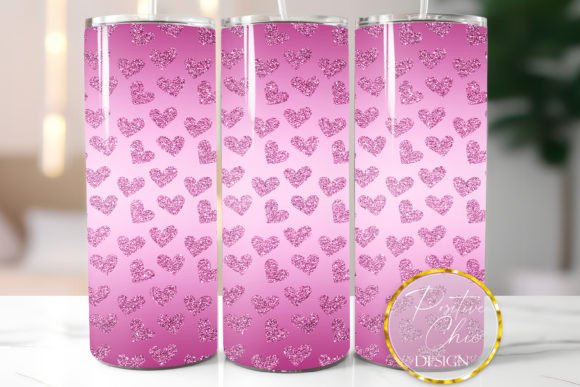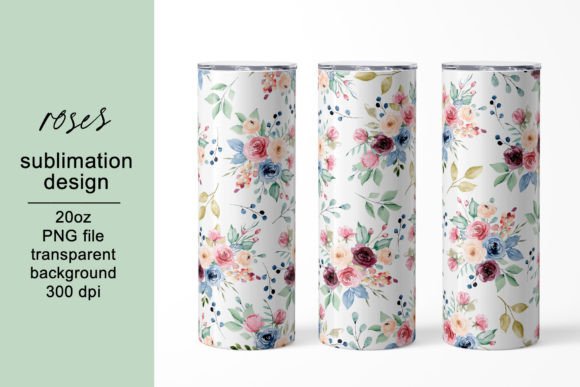
Tumbler Wrap with Watercolor Flowers
First Impression: Soft, Lively, and Surprisingly Versatile
When I opened Tumbler Wrap with Watercolor Flowers, I didn’t see just another clipart file—I saw a mood. The soft bleed of pigment, the gentle layering of petals, and that airy 9.3 x 8-inch layout immediately suggested movement and breathability. It’s not stiff or overly structured—no sharp edges, no rigid symmetry. That’s a relief. As an embroidery designer who’s stitched hundreds of floral motifs, I know how easily “watercolor” translates to muddy blobs under dense satin stitch or lost detail in fill areas. But this design carries its painterly looseness with intention. It feels like it was drawn for translation—not just sublimation on 20 oz tumblers (as described), but for thoughtful embroidery on fabric that moves, stretches, and lives.
A Real Project Test: Embroidering It on a Linen-Cotton Tea Towel
Last week, I used Tumbler Wrap with Watercolor Flowers as the centerpiece for a set of boutique kitchen towels—linen-cotton blend, medium weight, slightly textured. I resized it to fit a 5.5-inch hoop (keeping proportions intact) and chose a light stabilizer: tear-away + light cutaway backing for structure without stiffness. What stood out wasn’t just how pretty it looked—it was how *legible* it stayed after stitching. Petals retained their soft gradation because the design avoided micro-detail: no veins, no tiny stamens, no overlapping outlines that would vanish under thread. Instead, it relied on shape, negative space, and implied flow—qualities that translate beautifully into running stitch outlines and low-density fill stitches.
Customers responded strongly—not just to the flowers, but to the *handmade calm* the design projected. One Etsy buyer wrote, “It looks like something my grandmother painted, not something a machine stitched.” That’s the quiet power of this piece: it doesn’t shout “embroidery”—it invites pause.
Where It Shines (and Where It Needs Thought)
Tumbler Wrap with Watercolor Flowers excels on stable, medium-weight fabrics: tote bag canvas, unbrushed cotton sweatshirts, pillow covers, baby swaddles, and aprons. Its organic shape wraps naturally around curved seams and gently tapers at edges—ideal for side panels or back-of-cap placements (with minor scaling). On holiday embroidery or wedding gifts—think monogrammed linen napkins or embroidered onesies—it adds warmth without formality.
But let’s be practical: avoid using it full-size on thin knits or highly stretchy fabric without significant digitizing adjustments. The original layout assumes flat, stable ground—so on a curved cap front or a ribbed baby bodysuit, you’ll need to simplify outer contours or reduce stitch density manually. Likewise, dark fabric demands careful thread color planning: pale pinks and lavenders won’t pop without contrast testing. I always run a black-and-white mockup first—not just to check readability, but to spot where soft edges might blur into shadow.
Design Assets That Support Your Craft Business
As a digital product seller and Etsy reviewer, I’ve seen too many “watercolor” files fail commercially—not from lack of beauty, but from lack of embroidery-readiness. Tumbler Wrap with Watercolor Flowers avoids that trap. Its transparent PNG format makes it easy to preview on mockups, layer with text, or adapt for printable packaging. For craft business owners building cohesive branding, it pairs cleanly with minimalist typography or hand-drawn borders—no visual competition. And because it’s sized for a standard tumbler wrap, it scales predictably down to 3-inch patches or up to 8-inch tote bag centers without distortion.
What This Means for Your Finished Product
Embroidery isn’t just about what stitches you lay down—it’s about what story your customer takes home. Tumbler Wrap with Watercolor Flowers supports that story. It elevates a plain sweatshirt into a personalized gift. It gives a handmade baby blanket emotional resonance. It helps a small shop stand out at a craft fair—not through loudness, but through considered softness. That directly impacts buyer engagement, repeat orders, and perceived value. When customers recognize care in the details—even subtle ones like petal spacing or balanced negative space—they trust the maker more.
Practical Designer Notes Before You Stitch
- Always test Tumbler Wrap with Watercolor Flowers on scrap fabric first—especially if pairing it with applique design or layered stitch types.
- Review stitch density: watercolor motifs benefit from lighter fills and strategic satin stitch accents, not heavy coverage.
- Confirm hoop size compatibility—while the pattern is 9.3 x 8 inches, your machine may require resizing or splitting for larger hoops.
- Inspect small details at actual stitch scale: zoom in on your embroidery software to ensure delicate curves won’t collapse.
- Use proper stabilizer—medium-weight cutaway works best for apparel; tear-away suffices for tea towels or patches.
- Check licensing before selling finished items: since this is listed as a Graphics product, confirm whether commercial use is included.
- Compare performance on light vs. dark fabric backgrounds—thread color contrast is non-negotiable for clarity.
Final Thought: A Design That Respects the Medium
Not every floral graphic earns its place in real embroidery work. Many look stunning on screen but fall apart when translated into thread—too dense, too fussy, too reliant on digital perfection. Tumbler Wrap with Watercolor Flowers understands the language of fabric, needle, and motion. It’s designed for makers who value both aesthetic integrity and practical execution. Whether you’re prepping for a custom apparel order, building a collection of digital embroidery files, or launching your next Etsy listing in Crafts, this is one of those rare designs that feels like a collaborator—not just an asset.