Stained Glass Kingfisher Wind Spinner: Illustrations & Graphics
A Delicate, Light-Filled Accent for Artisan Brands
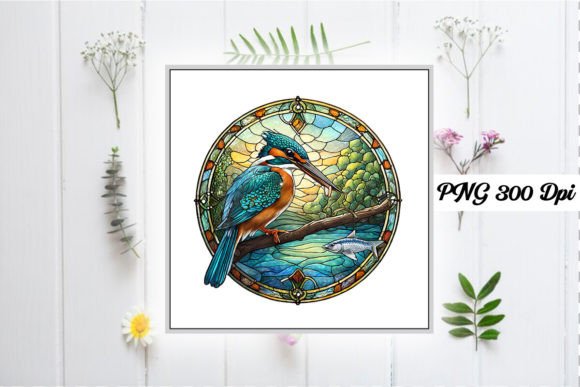
First impression? This Stained Glass Kingfisher Wind Spinner feels like sunlight catching a hand-cut glass panel—vibrant yet refined, decorative but never overwhelming. It carries an organic elegance that leans into handmade charm without sacrificing polish. Think botanical apothecary, small-batch candle studio, or coastal-inspired home goods boutique—not tech startups or corporate law firms. Its mood is quietly confident: joyful, nature-connected, and artisanal. That translucent stained-glass effect suggests craftsmanship, attention to detail, and a gentle sense of wonder—ideal for local businesses building emotional resonance over loud messaging.
Where This Graphic Design Asset Earns Its Keep
In real-world small business branding, the Stained Glass Kingfisher Wind Spinner shines brightest where visual storytelling meets tactile experience. I recently used it for a seasonal packaging refresh for a lakeside herbal tea brand—applied as a foil-stamped accent on kraft paper tea boxes, then echoed in social media banners and thank-you cards. It worked because it anchored the brand’s “wild + serene” positioning without competing with product names or ingredient lists.
- Product labels: Perfect as a top-corner emblem on soap bars, jam jars, or candle tins—especially when paired with earthy serif fonts and muted brand palettes.
- Packaging accents: Use it as a die-cut window overlay on matte mailer boxes or as a foil-embellished motif on hang tags for handmade jewelry or botanical prints.
- Social media graphics: Layer it over soft-gradient backgrounds for Instagram Story highlights or Pinterest pins—its transparent PNG makes blending effortless.
- Printable design assets: Works beautifully in Canva templates for farmers’ market flyers, seasonal menu cards, or boutique gift wrap inserts.
- Product mockups: Drop it into realistic 3D packaging previews (think candle jars, ceramic mugs, or linen pouches) to instantly elevate perceived value.
How It Strengthens Local Business Presentation
For small business owners juggling design themselves—or working with limited-budget designers—the Stained Glass Kingfisher Wind Spinner delivers measurable impact. It supports stronger first impressions by adding instant visual distinction on crowded shelves or Etsy listings. It improves product recognition through consistent, memorable decoration across touchpoints—from sticker seals on shipping packages to watermark-style repeats on website banners. Because it’s built with clean transparency and true 300 dpi resolution, it scales cleanly from 2-inch hang tags to 24-inch in-store posters. That consistency builds customer trust: when your label, card, and Instagram post all share the same delicate kingfisher motif, your brand feels intentional, not improvised.
Best Fit: Decorative, Not Dominant
This illustration excels where subtlety and warmth matter most. It’s ideal for hero graphics on boutique websites, seasonal campaign visuals (think spring launch or summer garden party collections), decorative brand elements on thank-you cards or printable recipe cards, and as a unifying motif across product mockups for handmade sellers. Florists use it on ribbon-printed gift tags; skincare brands layer it behind minimalist ingredient callouts; children’s product brands scale it down for sticker sheets—all while preserving its luminous clarity.
Use With Intention—Not Everywhere
It’s not a universal solution. Avoid placing it directly over dense legal text, fine-print ingredient lists, or low-contrast backgrounds where its delicate lines fade. Steer clear on ultra-minimalist luxury packaging (e.g., monochrome skincare with thin sans-serif typography)—here, it reads as busy rather than elegant. Don’t force it onto tiny 0.75-inch labels or crowded multi-product packaging panels where legibility suffers. And skip formal corporate branding—this isn’t a logo design replacement, but a supporting illustration asset meant to enrich, not define, your core identity.
Practical Brand Designer Notes You’ll Actually Use
Before locking it into final files, run these checks:
- Test it on real packaging mockups—not just digital previews—to gauge scale and contrast against your substrate (kraft paper vs. white gloss vs. recycled cardboard).
- Convert to grayscale to confirm readability if you ever need black-and-white versions for stamps, embossing, or accessibility compliance.
- Preview at actual size on small labels—does the wing detail hold up at 1.25 inches tall?
- Layer it beside each of your brand fonts: does it harmonize with your script logo? Contrast nicely with your display font headlines? Feel balanced next to your clean sans-serif body copy?
- Verify commercial licensing—this is a digital product from a creative marketplace, so confirm it permits physical product sales, client work, and resale in branded merchandise.
- Inspect the PNG transparency—no stray pixels or haloing around the glass edges—and note that it’s raster-only (no SVG/vector editability), so resizing beyond 6x6 inches requires careful interpolation.
Final Thought: A Thoughtful Touchpoint, Not a Shortcut
The Stained Glass Kingfisher Wind Spinner won’t replace thoughtful brand strategy—but in the hands of a local business owner or designer who understands context, it becomes a quiet amplifier. It adds warmth to a coffee shop’s holiday sleeve design, lends authenticity to a handmade soap brand’s Instagram carousel, and gives a seasonal candle line visual continuity across web, print, and product. When used intentionally—as part of a cohesive brand identity, not as standalone clipart—it transforms from illustration to invitation: an elegant, light-filled nudge toward connection, craft, and care. That’s the power of well-chosen graphics and illustrations in real small business branding.