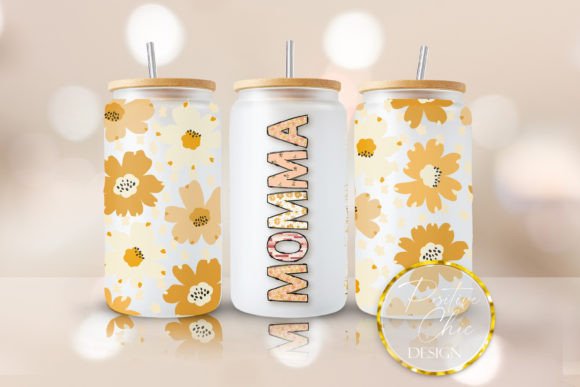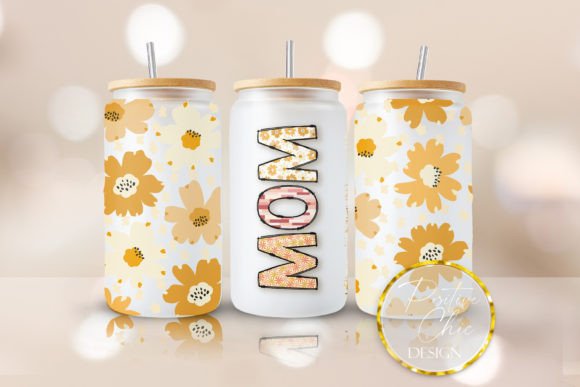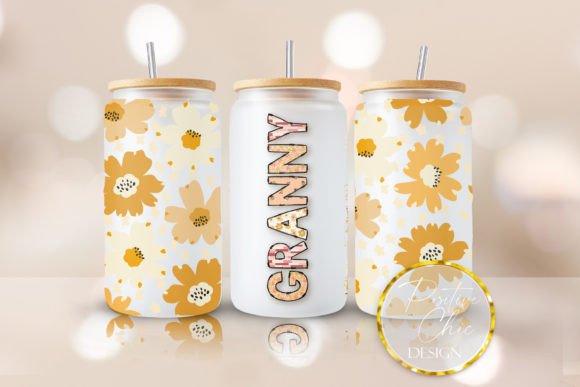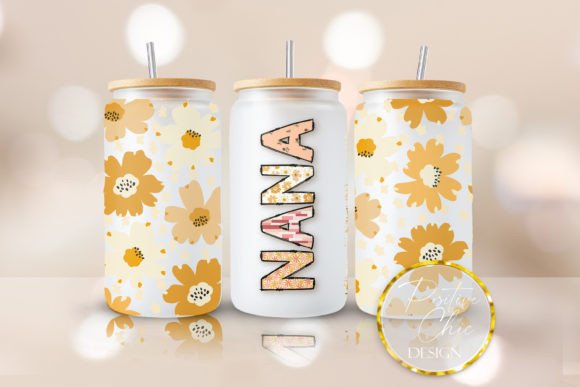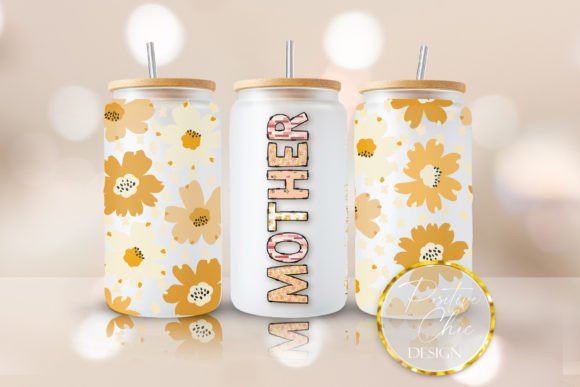
Mother Libbey Glass Floral UVDTF Wrap
A Designer’s First Glance: Delicate, Refined, and Purpose-Built
When I opened Mother Libbey Glass Floral UVDTF Wrap, my first thought wasn’t “pretty”—it was “intentional.” This isn’t a generic floral PNG tossed into a bundle. It reads like a designer sat down with a 16 oz Libbey glass tumbler in hand and asked: *What would wrap cleanly? What flows with the curve? What feels elevated but not fussy?* The composition leans into graceful asymmetry—soft trailing vines, open blossoms spaced to breathe, and subtle negative space that hints at transparency (a quiet nod to the glass itself). It’s clearly crafted for UVDTF sublimation, but as an embroidery designer, I immediately started translating it: Where would satin stitch shine? Which curves would translate well to fill stitch? How much detail survives at 3–4 inches wide?
Real-World Fit: From Boutique Shelf to Custom Gift Bag
Last week, I used a similar floral motif for a client’s small-batch embroidered linen tote bags—meant for a local florist’s wedding weekend pop-up. Imagine Mother Libbey Glass Floral UVDTF Wrap reimagined there: scaled to 3.5 inches tall, centered on the front pocket of a natural canvas tote. Not too busy, not too sparse—just enough botanical elegance to signal “thoughtful handmade,” without competing with the fabric’s texture. It’s the kind of design that makes customers pause, then say, “I need one for my sister’s baby shower.” That’s its sweet spot: personalized gifts, boutique merchandise, and small shop products where craftsmanship and quiet sophistication matter more than bold graphics.
Where It Shines in Embroidery Projects
- Embroidered tote bag design: Clean lines hold up beautifully on medium-weight canvas or linen—no distortion, no overcrowded stems.
- Sweatshirt embroidery: Works best on structured, non-stretch fleece or French terry; the open layout avoids dense fill areas that can stiffen the fabric.
- Personalized gift items: Ideal for tea towels, pillow covers, and baby embroidery on cotton knit (with light stabilizer) — the floral theme reads gentle and timeless.
- Commercial embroidery: Fits seamlessly into curated mockups for Etsy sellers or craft fair vendors who sell digital embroidery files alongside finished goods.
- Digital product previews: Its PNG clarity and transparent background make it easy to drop into printable mockups—no clipping masks needed.
Where to Proceed With Care
This isn’t a one-size-fits-all embroidery file—and that’s a strength, not a limitation. Because Mother Libbey Glass Floral UVDTF Wrap is built for sublimation on curved glass, some elements won’t translate directly to thread without thoughtful adaptation. For example:
- Small hoop sizes (<5" diameter): The vine’s length and bloom placement assume breathing room. Trimming it risks losing flow—better to scale down uniformly than crop.
- Textured or stretchy fabric: On slubbed linen or lightweight jersey, fine stem details may blur. A tear-away + cutaway hybrid stabilizer helps maintain definition.
- Dark fabric backgrounds: Since the original is light-based (UVDTF), test thread colors carefully. A soft sage green or warm taupe often reads truer than stark black on navy.
- Curved surfaces like caps: The design’s horizontal rhythm doesn’t wrap naturally over a crown. Save it for flat panels—front pockets, apron bibs, or towel hems.
- Frequent-wash items: If stitching this for kitchen towels or baby onesies, avoid ultra-dense fill stitches in petal centers—opt for lighter fill or satin outlines instead.
What It Adds—Beyond the Stitch
Using Mother Libbey Glass Floral UVDTF Wrap in your embroidery project quietly lifts perceived value. Customers don’t just see a flower—they register care in spacing, balance in proportion, and intention behind the line weight. That builds trust, especially for Etsy sellers or small shop owners whose brand hinges on consistency and attention. It also supports brand cohesion: pair it with minimalist typography or neutral thread palettes, and you’ve got a cohesive set of design assets for holiday embroidery, nursery decor, or wedding favors. And because it’s rooted in real-world object geometry (that Libbey tumbler), it feels grounded—not like clip art dropped onto fabric.
Practical Notes Every Embroidery Designer Should Check
- Test the design on scrap fabric matching your final project’s weight and stretch.
- Review stitch density in petal and leaf zones—adjust if needed for fabric drape.
- Confirm hoop size compatibility before digitizing; don’t force it into a 4x4 if the natural width is 5.2”.
- Inspect small details (like vine tips or stamen lines) at actual stitch-out size—some may need slight simplification.
- Try black-and-white and grayscale mockups to assess contrast before committing to thread colors.
- Compare how it reads on light vs. dark fabric backgrounds—some floral tones shift dramatically.
- Use appropriate stabilizer: medium cutaway for knits, lightweight tear-away for stable wovens.
- Verify licensing terms before selling finished embroidered items or bundling it with other digital embroidery files.
Final Thought: A Quietly Confident Choice
Mother Libbey Glass Floral UVDTF Wrap won’t shout from a craft fair table—but it will draw people in. It’s the kind of design that works hardest when it looks effortless: on a linen apron for a baker’s market stall, stitched in ecru on a cream baby blanket, or subtly repeated along the hem of a holiday tea towel. As a crafts professional, I appreciate that it respects the material, the machine, and the maker’s time. It’s not flashy. It’s focused. And in the world of handmade product and custom apparel, that focus is exactly what turns a simple embroidery project into something worth gifting, displaying, and remembering.