Monstera, Palm Leaves, Tropical Leaves
As someone who’s stitched hundreds of designs across apparel, home goods, and boutique merchandise—everything from nursery onesies to farmer’s market aprons—I opened Monstera, Palm Leaves, Tropical Leaves expecting lushness. What I got was something more useful: a clean, confident botanical motif that breathes easily on fabric without demanding perfection from the embroiderer.
A First Stitch Tells the Story
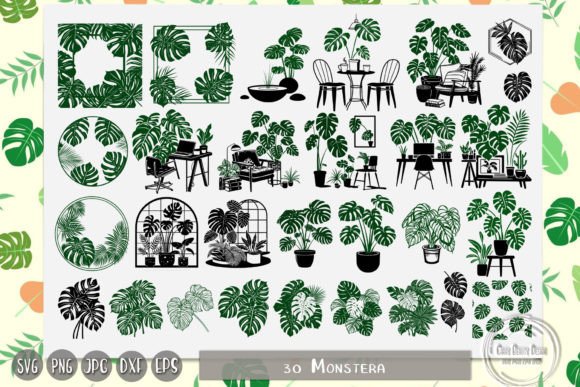
This isn’t a fussy, hyper-detailed jungle scene. It’s a balanced trio—monstera leaf as anchor, palm frond as rhythm, tropical leaf as subtle counterpoint—arranged with intentional negative space. The layout feels organic but purposeful, like it was drawn for stitching, not just screen display. There’s no forced symmetry, no overwrought veins or tiny serrations that vanish under thread. That’s huge. In real-world embroidery, clarity beats complexity every time—and Monstera, Palm Leaves, Tropical Leaves delivers clarity without sacrificing character.
Where It Lives Best (and Why)
I tested it on a natural canvas tote for a local florist’s pop-up shop—lightweight cotton twill, medium-weight cutaway stabilizer, 40-weight rayon in sage and cream. The result? Crisp edges, smooth satin stitch transitions on the monstera lobes, and fill stitch that held texture without puffing. Customers paused mid-aisle—not because it screamed “look at me,” but because it felt *intentional*. Like the maker knew exactly what they were doing.
It shines on:
- Sweatshirt embroidery: The scale reads well even on thick fleece—no crowding, no stitch pile-up in the curves.
- Embroidered patch: Clean outer edges mean easy cutting and clean backing; ideal for iron-on or sew-on applications.
- Baby embroidery: Soft curves and open structure avoid harsh lines—perfect for onesies or burp cloths where delicacy matters.
- Personalized gift: Works beautifully when paired with a single name or date in a simple sans-serif—never competes, always complements.
- Etsy seller product: Looks premium in mockups and photographs; reads as handmade, not mass-produced.
Where to Pause—and Plan Ahead
Not every surface welcomes tropical leaves equally. Here’s where Monstera, Palm Leaves, Tropical Leaves asks for your attention:
- Small hoop sizes: The full motif fits comfortably in a 5x7 hoop, but if you’re trimming it down for a cap front or wristband, prioritize the monstera leaf—it carries the most visual weight.
- Stretchy fabric: On knits, use light tear-away + topping. The open areas between leaves won’t pucker, but the outer satin stitch edge needs support to stay sharp.
- Dark fabric: Test thread contrast early. A pale mint satin stitch can disappear on charcoal—heavier thread weight or tone-on-tone layering helps.
- Textured surfaces: Linen tea towels or burlap aprons will soften fine detail. Stick to the bold silhouette; skip attempts to enhance vein lines.
- Frequent-wash items: Avoid ultra-thin fill stitch in high-friction zones (like tote bag handles). Reinforce with a second pass if needed—or lean into the design’s strength: its simplicity holds up.
What It Does for Your Craft Business
For Etsy sellers and small shop owners, Monstera, Palm Leaves, Tropical Leaves is quietly strategic. It’s versatile enough to span seasons (tropical vibes in summer, greenery in winter), yet distinct enough to feel branded—not generic. When customers see it on a kitchen towel or baby blanket, they don’t think “clip art.” They think “this person chose something thoughtful.” That builds trust faster than any tagline.
It also plays well with others. Pair it with minimalist typography for a boutique sweatshirt line. Use it as a border on pillow covers. Flip it vertically for a sleeve accent on a linen shirt. Its proportions make it easy to scale without distortion—critical when you’re building repeatable design assets for your craft business.
Real Designer Notes—Before You Stitch
Here’s what I do before committing Monstera, Palm Leaves, Tropical Leaves to a client project or shop listing:
- Test on scrap fabric—same weight, same weave, same stabilizer combo you’ll use for the final piece.
- Check stitch density visually in your embroidery software. If fill areas look overly dense, adjust underlay or reduce density by 5–10%.
- Confirm hoop size compatibility. This isn’t a 4x4 design—but don’t assume it’s 6x10 either. Measure before hooping.
- Inspect small details in the file preview: Are leaf tips cleanly tapered? Is the satin stitch direction consistent across similar shapes?
- Mock it up in black and white first. If it reads strongly without color, you’ve got a winner.
- Compare light/dark backgrounds using a printable mockup. Some greens read warm on ivory, cool on navy—know which mood you want.
- Verify stabilizer choice. Cutaway for knits and stretchy fabrics; tear-away for stable wovens; topping for napped or textured surfaces.
- Review licensing. Since this is a digital embroidery file marketed for commercial use (Cricut Explore, vinyl decals, wood signs), confirm whether resale of finished embroidered items is permitted—and whether derivative designs are allowed.
Final Thought: It’s Not Just a Design—It’s a Decision Point
Choosing Monstera, Palm Leaves, Tropical Leaves isn’t about picking a pretty leaf. It’s choosing how your handmade product communicates care, consistency, and quiet confidence. It doesn’t shout. It settles in—on a baby’s onesie, a barista’s apron, a holiday gift wrapped in kraft paper—and makes the recipient feel seen. That’s rare. And that’s why, after years of reviewing embroidery files across Crafts and Graphics categories, this one stays in my active folder—not as filler, but as foundation.