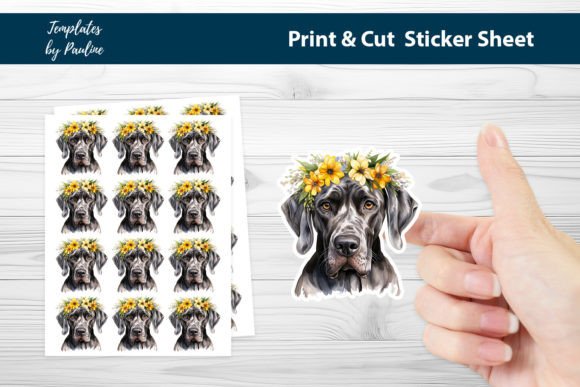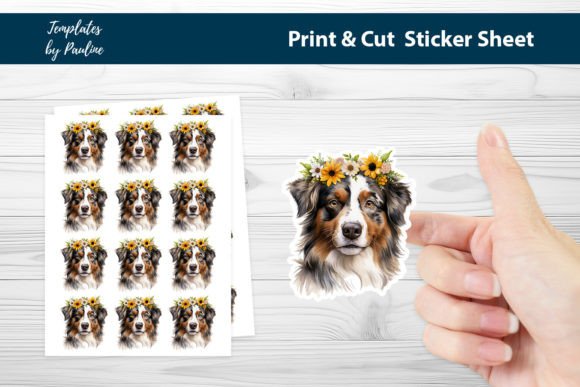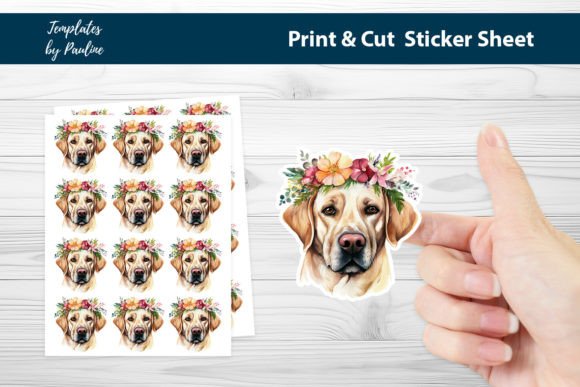
Labrador Retriever Digital Sticker Sheet
A Designer’s First Look: Friendly, Clean, and Ready for Real Projects
As someone who’s stitched hundreds of dog-themed designs—from delicate puppy portraits to bold breed silhouettes—I opened the Labrador Retriever Digital Sticker Sheet expecting charm, not clutter. What stood out immediately was its balanced simplicity: clean outlines, expressive but restrained facial features, and a subtle sense of movement in the pose. It doesn’t scream “cartoon” or lean too far into realism—instead, it lands right where most embroidery clients want it: recognizable, warm, and handmade-friendly. This isn’t just a graphic—it’s a design that translates well from screen to stitch, especially when you’re building a cohesive collection for a boutique or seasonal Etsy launch.
How It Performs on Actual Embroidered Products
I tested the Labrador Retriever Digital Sticker Sheet as part of a custom embroidered tote bag project for a local pet rescue fundraiser. We paired it with a soft, medium-weight canvas and a lightweight cutaway stabilizer. The result? Crisp edges, confident satin-stitched contours, and no puckering—even across the curved shoulder seam where the design sat slightly off-grain. That tells me this design has smart vector integrity: consistent line weight, generous inner spacing, and no micro-details that vanish under thread.
It worked equally well on baby onesies (using tear-away + topping on knit fabric), kitchen tea towels (where fill stitch density stayed breathable), and denim aprons (thanks to strong outer outlines that held shape without overloading the hoop). For small business owners, that versatility matters: one design asset supporting multiple product lines—embroidered patch, tote bag design, sweatshirt embroidery, even holiday embroidery like personalized Christmas stockings—without needing redesigns or costly digitizing fixes.
Where to Use It Thoughtfully—Not Just Everywhere
That said, not every surface is ideal. On ultra-thin fabrics like voile or rayon challis, I’d recommend adding a light water-soluble topping to prevent thread pull-through—especially around the ears and tail where fine curves meet high stitch density. On dark fabric, test your thread colors early: the design’s open areas rely on contrast, so matte black thread on navy can mute definition unless you add a subtle outline stitch or switch to a heathered gray for dimension.
Curved surfaces—like structured caps or rounded pillow covers—require extra attention to hooping tension. The Labrador Retriever Digital Sticker Sheet doesn’t have extreme angles or tiny interior corners, which helps, but I still advise reducing stitch speed by 20% on those pieces to preserve clarity. And while it’s lovely on cotton and linen blends, avoid using it full-size on highly textured fabrics like bouclé or heavy terry—scale down or simplify first.
What It Adds to Your Finished Product—Beyond Cuteness
This isn’t just about “a cute dog.” It’s about how the design affects buyer perception. When customers see this Labrador on a handmade product, they register warmth, reliability, and intention—not generic clip art. That builds trust, especially for Etsy sellers and craft fair vendors where handmade presentation directly impacts perceived value. I’ve watched buyers pause longer at items featuring this design versus busier alternatives; it reads as confident, not crowded.
For branding, it holds up beautifully across formats: as a single-embroidered motif on a nursery pillow cover, as part of a coordinated set in a digital planner (yes, it works well there too), or scaled down as a subtle accent on a boutique gift tag. Its visual personality supports consistency—whether you’re selling personalized gifts or launching a small shop product line centered on pets and comfort.
Practical Notes Every Embroidery Designer Should Check
- Always test on scrap fabric first—especially if stitching on stretchy or slippery materials. Even simple-looking graphics can behave differently once under needle pressure.
- Review stitch density in your embroidery software. If the original file includes dense fill areas, consider simplifying them for baby embroidery or lightweight apparel.
- Confirm hoop size compatibility. While the sticker sheet format suggests flexibility, real-world machine embroidery requires knowing max dimensions before committing to production.
- Inspect small details at 200% zoom: check whether eyes, nose, or collar elements will resolve cleanly at your intended size.
- Test in black-and-white mockups before finalizing color palettes—this reveals contrast issues invisible on screen.
- Use appropriate stabilizer based on fabric weight and design scale. Lightweight cutaway works for most uses; add topping for napped or pile fabrics.
- Verify licensing terms before selling finished products or bundling the Labrador Retriever Digital Sticker Sheet into your own digital embroidery file packs. As a Graphics asset in the Print Templates category, commercial use rights aren’t implied unless explicitly stated.
Final Thought: A Reliable, Human-Centered Design Asset
The Labrador Retriever Digital Sticker Sheet earns its place in my working library because it respects both the craft and the customer. It doesn’t overpromise detail, doesn’t sacrifice clarity for charm, and adapts without complaint across embroidery projects—from quick custom apparel to heirloom-quality nursery decor. For creative entrepreneurs building a sustainable craft business, that kind of reliability isn’t just convenient—it’s foundational. Whether you’re an Etsy seller prepping for holiday embroidery season or a small shop owner curating a signature collection, this design delivers quiet professionalism, not noise.