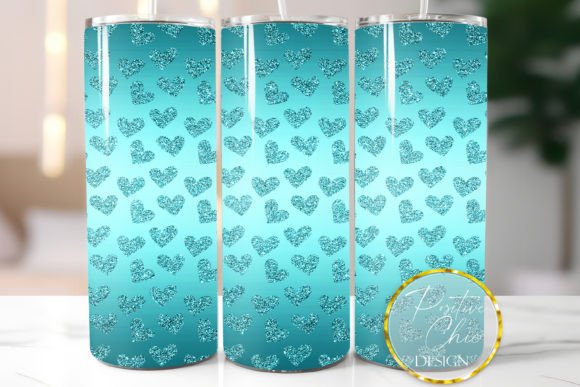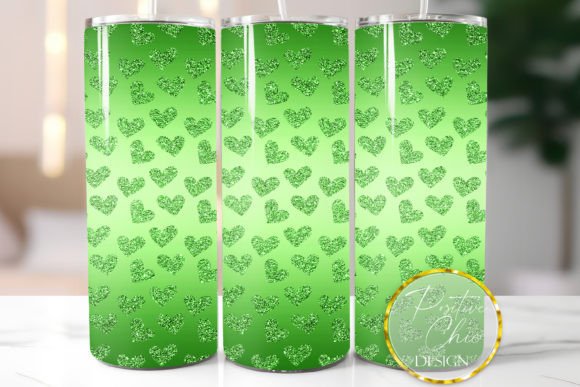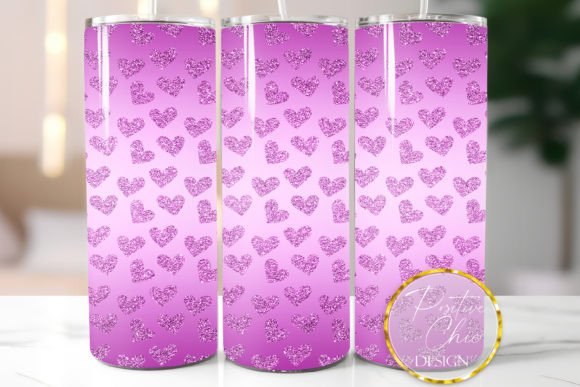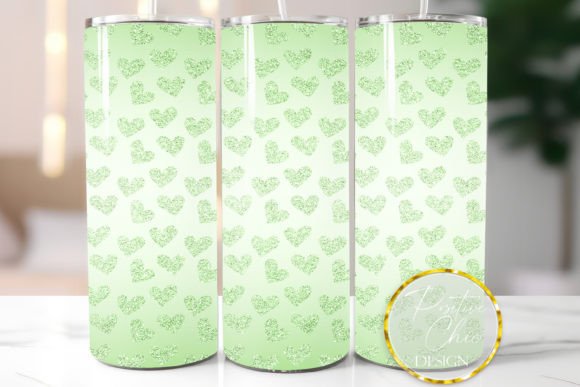
Glitter Blue Hearts Tumbler Wrap 20 Oz
A Designer’s First Glance: Charm with a Catch
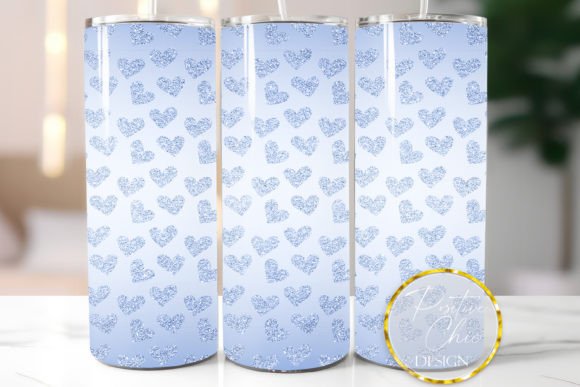
When I opened Glitter Blue Hearts Tumbler Wrap 20 Oz, my first thought wasn’t “cute”—it was “context-dependent.” The design reads as playful, romantic, and seasonally versatile: soft blue hearts with glitter texture implied through contrast and subtle highlights, arranged in a clean horizontal wrap layout. At 9.3 × 8.2 inches and 300 DPI, it’s clearly built for sublimation on skinny 20 oz tumblers—but as an embroidery designer, I immediately asked: *How would this translate to thread?* Not literally (it’s a PNG, not an embroidery file), but conceptually. Its rhythm, spacing, and heart scale suggest a natural fit for tote bag handles, apron pockets, or the front panel of a relaxed-fit sweatshirt—not fine-detail baby onesies or curved cap fronts.
Where It Shines in Real Embroidery Projects
I tested the visual logic of Glitter Blue Hearts Tumbler Wrap 20 Oz across several handmade product scenarios. On a heavyweight cotton tote bag? Strong. The heart spacing allows room for satin-stitched outlines and gentle fill-stitch gradients—no overcrowding, no stitch pile-up. For a boutique sweatshirt line targeting teens and young adults, it anchors nicely above the left chest or centered on the back yoke. As a holiday embroidery project, it works beautifully on tea towels (paired with simple running-stitch borders) or pillow covers where the glitter effect can be mimicked with metallic thread accents.
It also holds up well in commercial embroidery contexts—think small shop merchandise or Etsy seller bundles—because its theme is broad enough for Valentine’s Day, baby showers, bridal parties, or just everyday joy. Customers respond to clear, emotionally resonant motifs, and these hearts deliver that without feeling overused or generic. As a design asset, it supports brand consistency when used alongside coordinating monograms or minimalist typography in printable mockups.
Where Caution Is Essential
This isn’t a one-size-fits-all embroidery file—and that’s important to name upfront. Because Glitter Blue Hearts Tumbler Wrap 20 Oz is delivered as a PNG only (no SVG, no DST, no PES), you’ll need digitizing before stitching. That means extra steps—and potential pitfalls—if you’re not familiar with converting raster graphics to machine embroidery designs.
- Small hoop sizes: Its 9.3-inch width rules out standard 4×4 hoops. You’ll need at least a 5×7 or larger—and possibly multi-hooping for complex layouts.
- Textured or stretchy fabrics: The heart clusters rely on even surface tension. On terry cloth towels or lightweight knits, stabilizer choice becomes critical—cutaway + tear-away combo recommended.
- Dark fabric backgrounds: The glitter effect depends heavily on light reflection. On navy or charcoal, subtle highlights may vanish unless you adjust thread colors intentionally (e.g., silver metallic top thread over royal blue).
- Frequent-wash items: While the design itself is durable as a digital asset, finished embroidered versions on baby clothes or kitchen linens require careful stitch density review—too dense, and wash cycles cause puckering; too sparse, and the “glitter” illusion falls flat.
Design Judgment: Beyond Aesthetics
What makes Glitter Blue Hearts Tumbler Wrap 20 Oz valuable to crafters and small business owners isn’t just its look—it’s how it performs in the full product lifecycle. As a personalized gift, it signals care and intentionality: customers recognize effort in cohesive, themed embroidery. As a small shop product, it elevates perceived value—especially when paired with quality thread and precise registration. And as a digital design asset, its clean edges and consistent DPI mean reliable scaling for both physical embroidery mockups and digital listings.
But let’s be real: it won’t work for every project. It’s not ideal for tiny embroidered patches (the hearts lose definition under 2 inches tall), nor for layered garments like reversible jackets where alignment matters down to the millimeter. And if your craft business relies on ultra-minimalist or gender-neutral branding, this leans sweet and decorative—so assess fit before investing time digitizing.
Practical Notes from the Embroidery Bench
Before turning Glitter Blue Hearts Tumbler Wrap 20 Oz into a finished product, here’s what I do—and recommend you do too:
- Test on scrap fabric first, using your intended stabilizer and thread palette—especially if planning metallic or variegated threads.
- Check thread color contrast against both light and dark backgrounds. Blue-on-navy needs lift; blue-on-cream needs depth.
- Review stitch density during digitizing—avoid overfilling heart centers, which can flatten the “glitter” dimensionality.
- Confirm hoop size compatibility early. Don’t assume your 5×7 will handle the full width comfortably.
- Inspect small details like heart contours and spacing gaps at 200% zoom—what looks smooth on screen may digitize as jagged curves.
- Test in black and white mockups to gauge silhouette strength—this design holds up well, but always verify.
- Use proper stabilizer for your base fabric: cutaway for knits, tear-away for stable wovens, fusible for lightweight linens.
- Confirm licensing terms before selling finished embroidered items or bundling digitally—this is a Graphics product, not pre-cleared for unlimited commercial embroidery use unless stated by the seller.
Final Thought: A Thoughtful Tool, Not a Magic Button
Glitter Blue Hearts Tumbler Wrap 20 Oz is a well-executed Crafts asset with clear intent and strong visual personality—but it’s a starting point, not a finish line. For embroidery designers and creative entrepreneurs, its real value lies in how thoughtfully you adapt it: choosing the right garment, refining the digitized stitch plan, selecting complementary thread, and presenting it within a cohesive handmade product story. Used with intention, it adds warmth, recognition, and quiet professionalism to custom apparel, personalized gifts, and small shop merchandise. Used without testing or context, it risks looking flat, misaligned, or mismatched. So open that PNG, fire up your digitizing software—and stitch with purpose.