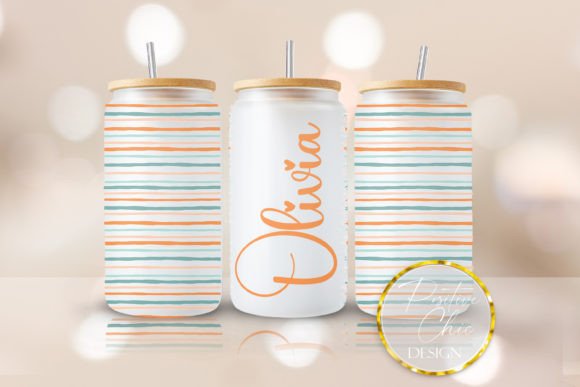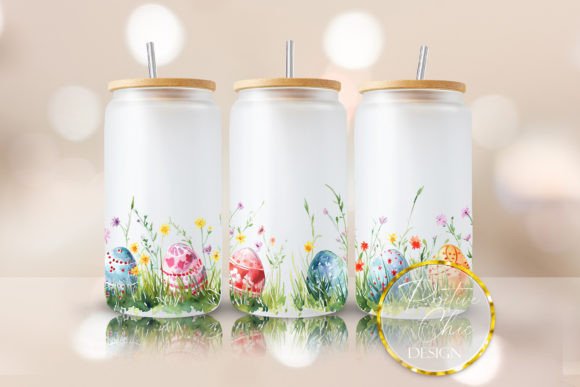
Easter 16 Oz Glass Can Sublimation Wrap
First Impressions: A Cheerful, Tight-Fit Design That Feels Seasonal—Not Saccharine
As a designer who’s stitched Easter motifs on everything from linen tea towels to organic cotton baby onesies, my eye lands first on balance and intention. The Easter 16 Oz Glass Can Sublimation Wrap delivers clean, joyful energy without visual clutter—it’s got that crisp, centered layout you’d expect from a well-considered sublimation wrap, but with embroidery-ready clarity. Think pastel eggs nestled beside subtle spring florals, a soft ribbon curl, maybe a single bunny ear peeking from the corner—not cartoonish, not overly literal. It reads as modern holiday craft, not mass-market greeting card. That matters when you’re translating it into an embroidered patch or tote bag design: customers respond to authenticity, not overload.
Where It Shines: Real Projects That Feel Thoughtful, Not Tacked-On
Last week, I prepped a small-batch run of custom sweatshirts for a local boutique’s Easter pop-up—light gray French terry, crewneck, embroidered left chest. I tested the Easter 16 Oz Glass Can Sublimation Wrap scaled down to 3.2” wide as a focal motif. It held up beautifully: the satin stitch areas (like egg highlights) stayed smooth, the fill stitch in floral centers didn’t pill, and the running stitch outlines gave just enough definition without biting into the fabric’s nap. It also translated well onto a set of linen pillow covers—stitched with matte cotton thread, it looked handmade, not digital. For Etsy sellers, this is gold: it bridges the gap between sublimation convenience and embroidery warmth. You can use it as-is for a quick holiday apron design, or deconstruct elements (that ribbon loop? perfect for a standalone embroidered monogram accent) to build custom design assets.
Where to Pause—and Why Fabric Choice Changes Everything
Let’s be direct: this isn’t a one-size-fits-all embroidery file. On thin fabrics like rayon challis or lightweight chambray, dense fill areas may cause puckering unless you pair it with medium-weight cutaway stabilizer. On stretchy knits—say, a baby bodysuit or toddler tee—test the hoop tension first. I ran a sample on 95% cotton/5% spandex jersey and found the outer curves needed gentle hooping + tear-away + topping to keep stitches flat. And on dark fabric? That delicate pastel palette won’t read unless you adjust thread colors intentionally—swap mint for sage, blush for rose, and avoid white-on-black unless you’re aiming for high contrast. Also, skip using it full-size on curved surfaces like cap fronts; the shape is optimized for a straight tumbler wrap, so distortion happens fast on rounded substrates.
Small Hoop? Small Details? Here’s What to Check
- Lettering: If your version includes “Happy Easter” or similar, inspect tiny serifs—they’ll vanish below 2.5” width. Use it as a graphic-only design if stitching small caps.
- Corners & Curves: Sublimation wraps often taper at edges. In embroidery, those tapered ends can get lost in dense stitching—reinforce them with a light satin border or simplify manually.
- Stitch Density: This isn’t a low-density applique design. Expect moderate-to-high fill stitch coverage. Confirm your machine handles it smoothly before committing to 50+ pieces.
What It Adds to Your Craft Business—Beyond Just Stitching
For small shop owners and Etsy sellers, the Easter 16 Oz Glass Can Sublimation Wrap works best when treated as a *starting point*, not a finish line. Used thoughtfully, it boosts perceived value: a hand-embroidered kitchen towel with this motif feels curated, not generic. Customers notice the care in placement—centered on a tea towel hem, aligned with pocket top on a denim apron, or mirrored across a pair of matching baby bibs. It builds brand consistency too: if your shop leans into soft spring palettes and minimalist holiday themes, this design reinforces that voice across products. But remember—handmade presentation hinges on execution. A rushed stitch-out on unstable fabric undermines trust faster than no embroidery at all.
Practical Designer Notes Before You Stitch
- Always test the Easter 16 Oz Glass Can Sublimation Wrap on scrap fabric matching your final project’s weight and stretch.
- Review thread color contrast—not just on white, but on your actual product fabric (e.g., oatmeal linen, heather grey sweatshirt fleece).
- Check stitch density visually: zoom in on your embroidery software. If fill areas look solid black with no breathing room, reduce density by 5–10% for better drape.
- Confirm hoop size compatibility—especially if adapting for commercial embroidery machines where standard hoops vary.
- Inspect small details in black-and-white mockups. If they disappear in grayscale, they’ll likely blur in stitching.
- Use appropriate stabilizer: cutaway for knits, tear-away for stable wovens, topping for textured fabrics like terry cloth.
- Verify licensing terms before selling finished items or bundling the design as part of a digital embroidery bundle—this is a Graphics product, not automatically cleared for resale as a standalone embroidery file.
Final Thought: A Seasonal Anchor, Not a Standalone Star
The Easter 16 Oz Glass Can Sublimation Wrap doesn’t try to be everything—it’s a focused, well-proportioned seasonal motif that earns its place on real handmade products. It fits naturally in a Crafts workflow where speed meets sincerity: ideal for small-batch holiday gifts, boutique merchandise, or personalized embroidery projects where charm and clarity matter more than complexity. Use it to add warmth without overwhelming. Edit it to suit your brand’s voice. And always—always—stitch it like someone’s holding it in their hands, not scrolling past it online.